
Summary:
Most people book an eye appointment the same way they’d search for a plumber — they need one, they find one nearby, they go. The difference between an optometrist, an ophthalmologist, and an optician barely crosses their mind. And honestly, for routine care, it doesn’t need to. But when something feels off — a sudden change in vision, a contact lens that never quite fits right, a family history of glaucoma — knowing who does what starts to matter a lot more. This guide lays it out plainly so you can walk in knowing exactly what kind of professional eye care you’re getting, and why it makes a difference.
What Eye Doctors Actually Do: Roles and Responsibilities
The term “eye doctor” gets used loosely, but it covers three very different types of professionals. An optometrist (OD) is your primary eye care provider — the person most people see for annual exams, glasses prescriptions,contact lens fittings, and the detection of conditions like glaucoma or diabetic retinopathy. An ophthalmologist is a medical doctor (MD or DO) who specializes in eye disease and performs surgery. An optician fits and dispenses eyewear from a prescription written by one of the other two — they don’t examine eyes or write prescriptions.
For the vast majority of people, an optometrist handles everything they need. About 85% of managed vision care exams in the U.S. are performed by ODs, not MDs. That’s not a workaround — it’s how the system is designed to work.
What Does an Optometrist Actually Do During Your Appointment?
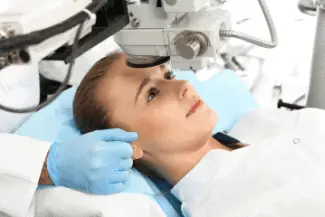
A lot more than update your prescription. A thorough comprehensive eye exam checks your visual acuity, yes — but it also measures intraocular pressure (an early indicator of glaucoma), examines the retina and optic nerve, evaluates how your eyes work together, and screens for systemic conditions that often show up in the eyes before anywhere else. Diabetes, hypertension, and even early signs of multiple sclerosis can all be detected during a dilated eye exam.
That last part — dilation — is worth calling out specifically, because many practices skip it for convenience. Dilation is the most accurate way to get a clear view of the retina and optic nerve. When we perform a dilated exam, we’re not just checking your prescription — we’re screening for serious conditions that could affect your vision and overall health.
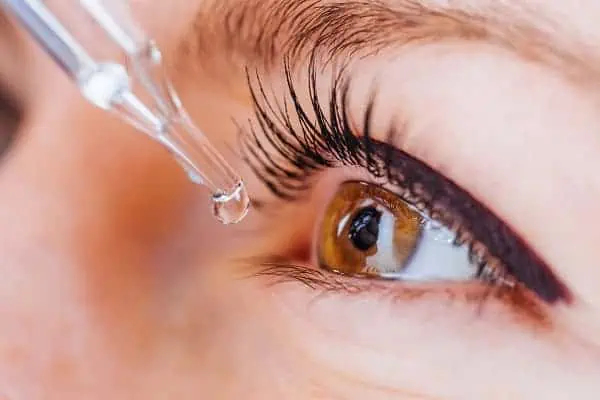
Optometrists are also trained and licensed in New York State to use pharmaceutical agents — meaning we can prescribe eye drops for infections, inflammation, dry eye, and other conditions. We co-manage patients before and after surgical procedures like LASIK and cataract surgery, handle emergency presentations like sudden red eye or foreign body removal, and monitor chronic conditions over time. It’s primary care for your eyes, not just a prescription stop.
What separates a good optometrist from a forgettable one often comes down to time and attention. A rushed 15-minute exam at a retail chain covers the basics. A thorough exam — the kind that takes 45 to 60 minutes and actually involves a conversation about your health history, your screen habits, your family history — gives you a meaningfully different picture of your eye health.
When Do You Actually Need an Ophthalmologist Instead?
Ophthalmologists complete a minimum of 12 years of training: four years of college, four years of medical school, a one-year internship, and a three-year residency. Sub-specialists — retina surgeons, glaucoma specialists, corneal specialists — add another two years of fellowship training on top of that. This level of training exists because their scope of practice includes surgery, which optometrists are not licensed to perform.
You’d typically see an ophthalmologist when surgery is on the table — cataract removal, LASIK, retinal detachment repair, or treatment for advanced glaucoma. You might also be referred to one if you have a complex condition that requires subspecialty management, like a retinal tear, severe diabetic eye disease, or a tumor.
Here’s what that means practically: if you’re a generally healthy adult coming in for an annual exam, a contact lens fitting, or monitoring of a known condition like early glaucoma or dry eye, an optometrist is the right provider. If your optometrist detects something that requires surgical intervention or specialist-level management, they’ll refer you. That referral relationship — the co-management model — is how good eye care is supposed to work. Your OD handles the primary care side; your ophthalmologist handles the surgical or highly specialized side. They work together, not in competition.
For patients in Suffolk County, this means you can get comprehensive primary eye care locally without unnecessary referrals or delays. When we identify something that needs surgical expertise, we have established relationships with trusted ophthalmologists to make sure you’re in the right hands.
Eye Doctor Credentials Explained: What OD, MD, and Licensed Optician Actually Mean
Credentials matter, but the abbreviations can be confusing — especially when some of them appear on your prescription and mean something completely different than they do after a doctor’s name. Understanding what you’re looking at helps you evaluate who you’re seeing and what they’re qualified to do.
An OD after a doctor’s name means Doctor of Optometry — a four-year post-graduate professional degree. An MD or DO after a name means they completed medical school and are a physician. A licensed optician in New York State has completed specific training and passed three separate examinations to earn the right to fit and dispense prescription eyewear.
What Does "OD" Mean — on Your Prescription and After a Doctor's Name?
This is one of the most common points of confusion in eye care, and it’s understandable. OD shows up in two completely different contexts, and they mean two completely different things.
When you see OD after a doctor’s name — as in Dr. Edward J. Moylan, OD — it stands for Doctor of Optometry. Earning that credential requires completing undergraduate prerequisites followed by a four-year accredited optometry program, passing national board examinations through the National Board of Examiners in Optometry (NBEO), and meeting all state licensing requirements. In New York, that also means satisfying the NYS Education Department Office of the Professions before you can legally practice or use the title “optometrist.”
When OD appears on your actual eyeglass or contact lens prescription, it means something entirely different: oculus dexter, which is Latin for right eye. You’ll also see OS — oculus sinister, or left eye — and sometimes OU, which refers to both eyes together. These are standardized abbreviations used across all prescription eyewear, regardless of who wrote the prescription.
So when you see “OD” on your paperwork, context is everything. One tells you about the person treating you. The other tells you which eye needs which correction.
It’s also worth knowing that a contact lens prescription is not the same as a glasses prescription, even if it comes from the same appointment. Contact lens fittings require additional measurements — corneal curvature, lens diameter, base curve — that aren’t included in a standard glasses Rx. You need a separate contact lens exam to get a valid contact lens prescription, and that exam should include a fitting evaluation to confirm the lens actually works on your eye before you order a year’s supply.
What It Takes to Be a Licensed Optician in New York State — and Why It Matters
Opticians often get overlooked in the conversation about eye care credentials, but in New York State, they’re held to a specific and meaningful standard. To legally fit and dispense prescription eyewear in New York, an optician must earn a professional license through the NYS Education Department — not just complete a training program, but pass three separate examinations: the National Opticianry Competency Examination (ABO), the Contact Lens Registry Examination (NCLE), and a state practical exam.
That licensing requirement exists for a reason. Fitting glasses correctly involves far more than handing someone a pair of frames. Pupillary distance, nose bridge fit, frame alignment, lens positioning relative to the eye — all of these affect how well a prescription actually performs. A lens ground to the right numbers but positioned incorrectly in front of your eye won’t give you the vision you’re supposed to have. Getting that right requires trained hands and a licensed professional, not an algorithm.
This is also why New York State law requires prescription eyewear to be fitted and dispensed in person by a licensed practitioner. Buying glasses from an online retailer isn’t illegal, but it bypasses the in-person fitting process that the law recognizes as essential to getting eyewear that actually works. If you’ve ever ordered glasses online and found them slightly off — a little blurry, or headache-inducing even though the prescription seemed right — this is often why.
We have two licensed New York State opticians on our staff at North Shore Advanced Eyecare. That means the people helping you select and fit your frames have passed the same credentialing bar the state requires. Whether you’re picking up your first pair of progressives or getting fitted for a specialized lens design, you’re working with professionals who know what they’re doing.
Finding the Right Professional Eye Care in Suffolk County, NY
The short version: most people need an optometrist for primary eye care, and they need one who takes the time to actually look. Not a 15-minute chain exam, not a rotating associate you’ve never met before — a credentialed, experienced provider who knows your history and can detect a problem before it becomes a bigger one.
Suffolk County has no shortage of places to get an eye exam. What’s harder to find is a practice with 25 years of roots in the community, residency-trained doctors, licensed opticians on staff, and a reputation built on actual patient outcomes rather than marketing.
If you’re somewhere between “I haven’t had an exam in years” and “something feels off and I’m not sure who to call,” that’s exactly the kind of situation we’re set up to handle. We’re on Route 112 in Port Jefferson Station and have been taking care of Suffolk County families for a long time. Give us a call or stop by.