Summary:
Most people don’t think much about eye care until something goes wrong — a child struggling in school, a sudden redness that won’t clear up, or a prescription that just doesn’t feel right anymore. When that happens, you’re often surprised to find that not every eye doctor offers the same level of care.
There’s a wide spectrum between a quick prescription update at a retail chain and a full-scope clinical exam at an advanced optometry practice. This page is here to help you understand that difference — and figure out what kind of care actually fits your situation.
What an Eye Care Center Optometrist Actually Does (vs. What You Might Expect)
The term “eye exam” gets used for a lot of different things. At a retail vision center, it usually means a quick check of your visual acuity, a prescription update, and a handoff to the eyewear sales floor. That’s not inherently bad — but it’s also not the same as a comprehensive medical eye exam.
We do something different. We’re looking at the health of your eye, not just how well you see a chart. That means screening for glaucoma, macular degeneration, diabetic retinopathy, and other conditions that can be completely asymptomatic in their early stages — meaning you’d have no idea anything was wrong without a thorough exam.
The distinction matters because many of the most serious eye conditions are only reversible, or manageable, when caught early. By the time you notice symptoms, the window for the best outcomes has often already narrowed.
What Does a Comprehensive Eye Exam Include That a Basic Vision Check Doesn't?
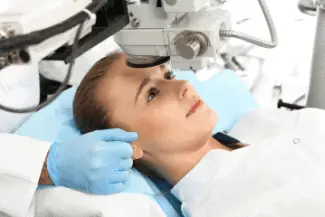
A comprehensive eye exam at our practice typically covers far more ground than a standard prescription check. We evaluate the internal and external structures of your eye, assess your peripheral vision, measure your eye pressure, and examine the optic nerve and retina for early signs of disease. We also use diagnostic technology — retinal imaging, visual field testing, corneal topography — that retail chains often don’t have on-site.
Your appointment tends to take longer, not because of inefficiency, but because we’re building a clinical picture of your eye health over time. That’s actually the point. When you see the same optometrist year after year, we’re not starting from scratch each visit — we’re comparing what we see today against a baseline we’ve been tracking for years. Subtle changes in the optic nerve or retina that might look unremarkable in isolation become meaningful when we have five or ten years of context.
This is also where the difference between retail and independent comprehensive care becomes most visible. Corporate optometry now accounts for roughly 45% of practices in the U.S., and those practices are largely optimized for volume and throughput. Our practice is structured differently — the clinical relationship is the product, not the eyewear transaction.
For patients managing chronic conditions like diabetes or hypertension, this distinction is especially important. Diabetic retinopathy is a leading cause of blindness in working-age adults — and it’s largely preventable with consistent monitoring. That kind of longitudinal care is difficult to deliver in a high-volume retail environment.
When Should You See a Specialist vs. a Primary Eye Care Optometrist?
One of the most common points of confusion for patients is understanding when they need a specialist — an ophthalmologist, a retina specialist, a neuro-optometrist — versus when a primary eye care optometrist can handle everything.
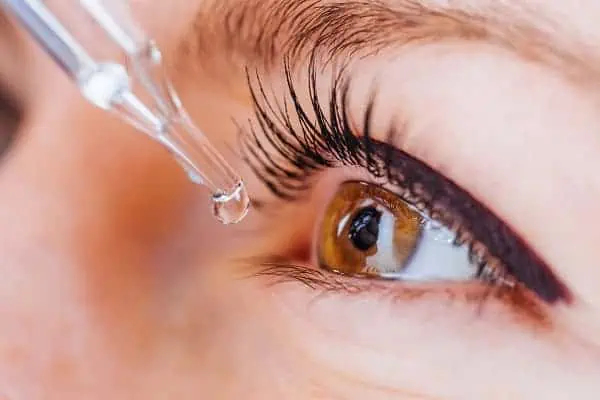
The short answer: we can manage the vast majority of eye health needs without a referral. That includes diagnosing and treating dry eye disease, managing early-to-moderate glaucoma, monitoring diabetic changes in the eye, fitting specialty contact lenses for complex corneal conditions, and co-managing patients before and after cataract or LASIK surgery. Referrals happen when surgery is required, or when a condition falls outside the scope of what optometry can treat — but that’s a smaller subset of cases than most people assume.
We also offer specialized services in areas like pediatric vision, behavioral optometry, and neuro-optometry — disciplines that address how the brain processes visual information, not just how clearly the eye sees. These services are particularly relevant for children who struggle with reading or attention, patients recovering from traumatic brain injury, and adults experiencing visual disturbances that don’t have a straightforward refractive explanation.
The key is finding a practice with enough clinical depth to handle what you actually need. Our doctors include residency-trained optometrists with experience in complex cases — the kind of training you’d get in a VA hospital setting, where patients often present with multiple systemic conditions. That brings a different level of diagnostic thinking than a first-year associate at a chain store. Residency training in optometry is a post-doctoral clinical program, similar in concept to a medical residency, and it’s not a universal requirement. When a doctor has completed one, it’s worth noting.
How to Choose the Right Eye Doctor in Suffolk County, NY
Suffolk County has no shortage of eye care options — retail chains, multi-location ophthalmology groups, independent practices, and boutique eyewear studios all compete for the same patients. So how do you actually sort through them?
Start with what you need. If you’re a healthy adult looking for a routine prescription update and a new pair of frames, your options are wide. But if you have a chronic health condition, a child with a suspected vision problem, a history of difficult contact lens fittings, or any kind of acute eye issue, the type of practice you choose matters significantly more.
Credentials, tenure, and patient reviews are your most reliable filters. In a community-oriented market like the North Shore, word-of-mouth carries real weight.
Pediatric Eye Care on Long Island: What Parents in Port Jefferson Station Should Know
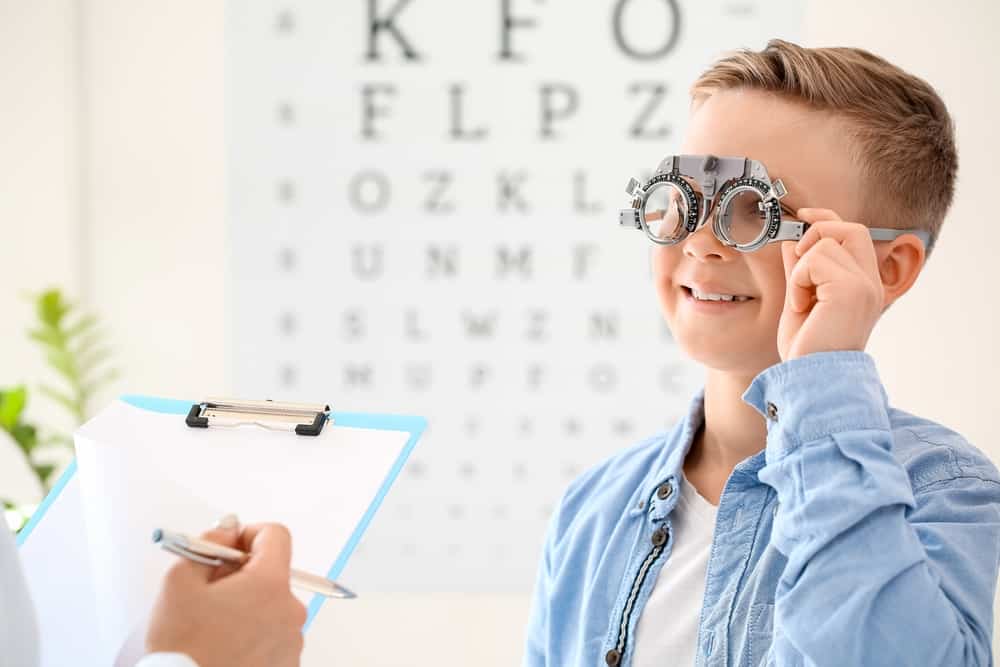
Children rarely complain about vision problems — not because their eyes are fine, but because they have no reference point for what normal vision looks like. A child who has always seen the world slightly blurred doesn’t know to mention it. That’s why pediatric eye exams matter well before a teacher flags a problem or a school screening raises a concern.
The American Optometric Association recommends a child’s first comprehensive eye exam at six months, another at age three, and again before starting school. School vision screenings — the kind done in a gym with a chart on the wall — are not substitutes. They catch obvious acuity problems but miss conditions like amblyopia (lazy eye), convergence insufficiency, and binocular vision disorders that can significantly affect a child’s ability to read, focus, and learn.
Here in Suffolk County, back-to-school season in late August and September is when most parents think to schedule pediatric eye exams — and practices fill up fast. If your child’s teacher has mentioned squinting, headaches, or difficulty concentrating on the board, don’t wait for the fall rush. These symptoms are worth addressing promptly, and early intervention for conditions like amblyopia is most effective before age seven.
We take the time to examine a child who can’t yet read a letter chart, explain findings in plain language to parents, and coordinate with schools or other providers when needed. That’s a different experience than a standard adult exam with a smaller chart.
"I've Been Told I Can't Wear Contacts" — What Difficult-to-Fit Patients Should Know
It’s one of the more frustrating things a patient can hear: you’ve tried contacts, they haven’t worked, and somewhere along the way someone told you that you’re just not a good candidate. For a lot of patients in Suffolk County, that’s where the story ends — they go back to glasses and assume that’s the only option.
It doesn’t have to be. Specialty contact lens fitting has advanced considerably, and many patients who were turned away from standard soft lens fittings can be successfully fitted with scleral lenses, gas-permeable designs, or custom soft lenses. These are not niche products — they’re established clinical tools used for patients with keratoconus, post-surgical corneas, severe astigmatism, and chronic dry eye conditions that make standard lenses uncomfortable.
The catch is that fitting specialty lenses requires specific training, the right diagnostic equipment, and a willingness to invest time in a process that isn’t as straightforward as handing someone a trial pair. Not every practice offers it. Retail chains almost never do. If you’ve been told contacts aren’t an option without ever seeing a specialist in difficult-to-fit cases, it’s worth getting a second opinion from a practice that specifically handles this.
For patients on the North Shore, this is a meaningful gap in the local market. Most of the large multi-location groups in Suffolk County are focused on surgical ophthalmology — LASIK, cataract surgery, premium lenses. The patient who just wants to wear contacts comfortably and has been struggling to find someone who can help them is often underserved. That’s a specific, solvable problem — and it starts with finding a practice that treats it as a specialty rather than an afterthought.
Finding the Right Eye Care Center in Port Jefferson Station, NY
The right eye doctor isn’t just whoever is closest or whoever has the shortest wait. It’s a practice with the clinical depth to handle what you actually need — whether that’s a routine annual exam, a complex contact lens fitting, a child’s first visit, or ongoing management of a condition that requires real continuity of care.
On the North Shore of Long Island, that kind of practice is rarer than it should be. Most of what’s available falls into two categories: large surgical groups focused on procedures, or retail chains focused on throughput. We occupy a different space entirely — a full-scope independent optometry practice with residency-trained doctors, licensed opticians, and over 25 years of roots in the community.
We’re located on Route 112 in Port Jefferson Station, and we offer evening appointments on Mondays and Tuesdays, plus Saturday morning hours, because we know most people can’t just take a Tuesday afternoon off.