Summary:
If you’ve tried contact lenses before and it didn’t go well — they felt dry by noon, your vision was never quite right, or you were told your eyes just aren’t suited for them — you’re not alone, and it probably wasn’t your eyes that were the problem. About 22% of contact lens wearers eventually stop wearing them, and a significant chunk of new wearers quit within the first year. Most of the time, the issue traces back to the fitting itself: what was measured, what was skipped, and whether anyone followed up. Here’s what actually goes into a proper contact lens fitting, and why cutting corners on any part of it tends to catch up with you.
Contact Lens Exam vs. Eye Exam: They're Not the Same Appointment
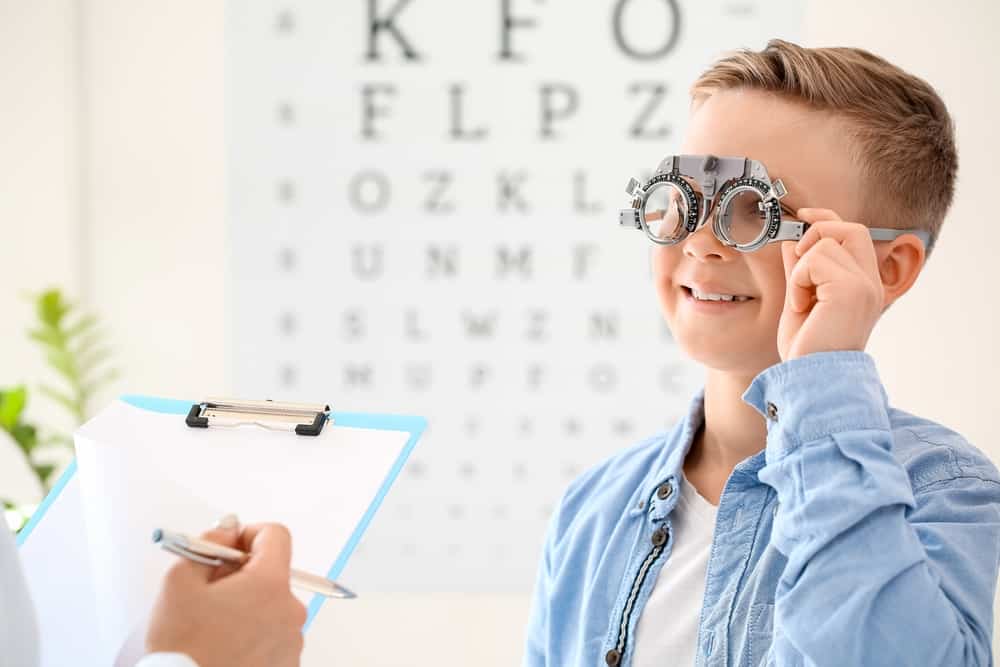
This is probably the most common source of confusion — and frustration — when it comes to contact lenses. A routine eye exam tells you what your prescription is and checks the overall health of your eyes. A contact lens exam goes further. It measures the specific parameters needed to fit a lens that actually sits correctly on your cornea, moves the way it should with each blink, and stays comfortable through a full day of wear.
Your glasses prescription doesn’t translate directly to a contact lens prescription. Contacts need a base curve measurement — the curvature of the back of the lens — that has to match the shape of your cornea. They also require a diameter, a specific brand or material, and an assessment of your tear film to determine whether your eyes can sustain comfortable lens wear in the first place. None of that comes from a standard eye exam.
What Does a Contact Lens Fitting Actually Measure?
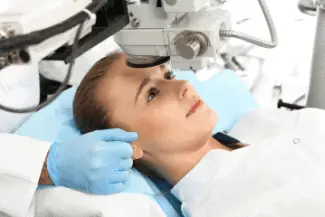
A thorough contact lens fitting starts with corneal topography — essentially a detailed map of the surface of your eye. No two corneas are shaped exactly alike, and that unique curvature determines which lens designs will center properly, which will slide around, and which will create pressure points that cause irritation hours into your day. This step alone separates a real fitting from a rushed one.
From there, your pupil and iris are measured to determine the right lens diameter. Your tear film is evaluated — because if your eyes don’t produce enough tears, or if the quality of those tears is poor, certain lens materials will dry out on your eye faster than others. Your eyelid position and the way your lids move when you blink both affect how a lens settles and whether it stays in place during normal activity.
Then comes the trial lens phase. A lens goes in, and we watch how it moves, check centration, and evaluate your vision with it in place. You’ll be asked how it feels — whether you’re aware of it, whether there’s any initial irritation. That feedback matters. After a wearing period, there’s a follow-up evaluation to see how the lens performs after several hours of real-world use, not just in a clinical setting.
This is why a contact lens fitting takes more time than a glasses prescription update. It’s also why the fee is separate — you’re paying for a meaningfully different level of evaluation. Patients who understand this going in tend to have much better experiences than those who expect it to be a quick add-on to their annual exam.
Why So Many First-Time Fittings Don't Stick
The 25% of new wearers who quit within their first year aren’t all people with inherently difficult eyes. Many of them simply didn’t get a fitting that addressed the full picture. Corneal topography was skipped. The tear film wasn’t assessed. A lens was selected based on prescription alone, without accounting for the patient’s lifestyle — how long they wear lenses each day, how much time they spend in front of screens, whether they’re outdoors in dry or windy conditions.
For our patients across Suffolk County, that lifestyle piece matters more than people might expect. If you’re spending summer weekends on the water in Port Jefferson Harbor, or commuting into the city and staring at a screen for eight hours, or coaching your kid’s soccer team in the middle of spring allergy season — those aren’t abstract variables. They directly affect which lens material will keep you comfortable and which ones will have you reaching for eye drops by 3 p.m.
The other thing that derails early fittings is the absence of follow-up. A lot of practices fit a lens, hand over a trial pair, and consider the job done. But the real evaluation happens after you’ve worn the lenses through a normal day. End-of-day comfort, how your vision holds up during extended screen time, whether your eyes look healthy when examined after several hours of wear — that’s the data that determines whether a fitting actually worked. Without a follow-up visit built into the process, problems get missed, patients assume the discomfort is normal, and eventually they stop wearing contacts altogether.
There’s also the issue of patients who were told, often years ago, that they couldn’t wear soft lenses because of astigmatism or dry eyes. That was sometimes true with older lens technology. It’s largely not true anymore. Modern toric lenses correct astigmatism effectively. Daily disposables can be a better fit for people with dry eyes or allergies than extended-wear lenses. The conversation has changed — but not every provider has updated the conversation they’re having with patients.
Why Contact Lens Follow-Up Visits Are Essential to Your Success
A follow-up visit after your initial fitting isn’t optional — or at least it shouldn’t be. It’s where the actual fine-tuning happens. Lenses that felt fine in the exam room can behave differently after six or eight hours of wear. Your cornea can show subtle changes that are only visible after extended contact with a lens. The follow-up is where we catch those things before they become real problems.
Skipping this step is one of the most common reasons fittings fail. Not because the initial lens selection was wrong, but because there was no mechanism to find out. Patients assume that if the lens went in and they could see, the fitting was successful. Sometimes it was. But sometimes the lens is sitting slightly off-center, or the material isn’t holding moisture well enough for your particular tear chemistry, and without a follow-up, that information never surfaces.
What Happens When a Contact Lens Fit Is Off — and You Don't Know It
Most contact lens complications don’t announce themselves dramatically. They build gradually. A lens that doesn’t fit quite right creates friction on the corneal surface with every blink. Over time, that friction causes low-grade irritation, redness, and in some cases, changes to the corneal tissue itself. End-of-day dryness — which about 55% of contact lens wearers report — is often a signal that something about the lens material, fit, or wearing schedule isn’t right for that person’s eyes.
Giant papillary conjunctivitis, an allergic reaction affecting up to 20% of contact lens wearers, is another complication that develops when lenses aren’t fitting or being replaced correctly. It’s uncomfortable, it temporarily sidelines you from wearing contacts, and it’s largely preventable with proper fitting and hygiene guidance from the start.
There are roughly one million contact lens-related healthcare visits in the U.S. every year. The vast majority of those visits involve complications that a better fitting process — combined with patient education and follow-up care — would have caught earlier or prevented entirely. The fitting isn’t just about comfort. It’s about keeping your eyes healthy over the long term.
This is especially relevant for our patients in Suffolk County who wear lenses year-round through conditions that vary significantly with the seasons. Long Island’s spring pollen counts are substantial, and allergy season can turn a previously comfortable lens into a daily irritant if no one has discussed how to manage that. A follow-up visit — or even a quick check-in during allergy season — can make the difference between pushing through and actually enjoying your lenses.
Specialty Contact Lenses for Eyes That Don't Fit the Standard Mold
Not every eye fits a standard soft lens design, and that’s not a problem — it’s just information. Conditions like keratoconus, irregular corneas, significant astigmatism, presbyopia, and chronic dry eye all require a different approach to fitting. The mistake isn’t having one of these conditions. The mistake is seeing a provider who doesn’t have the training or tools to address it.
Specialty contact lenses — including rigid gas permeable lenses, scleral lenses, hybrid designs, and multifocal lenses — exist precisely because the standard options don’t work for everyone. Scleral lenses, in particular, have grown significantly in recent years. They vault over the entire corneal surface and rest on the less sensitive tissue of the sclera, making them an option for people with irregular corneas or severe dry eye who had previously written off contact lenses entirely. Nearly half of eye care practitioners surveyed in 2024 identified scleral lenses as having the greatest growth potential in the field — which reflects both the demand and how effective they’ve become.
Fitting specialty lenses requires corneal imaging, a more involved trial process, and a provider who has worked with these designs enough to know how to interpret what they’re seeing. It’s not something that gets done well in a 15-minute appointment. The fitting process for a scleral lens, for example, involves selecting a diagnostic lens based on corneal measurements, evaluating the fit in detail, and often making multiple adjustments before arriving at the final prescription parameters.
For patients in Suffolk County who’ve been told by a previous provider that contacts simply aren’t an option, it’s worth getting a second opinion from someone who specializes in this area. The technology has advanced considerably, and the answer to “can I wear contacts?” is different today than it was five or ten years ago. What it requires is a provider willing to take the time — and one with the clinical background to know which options are actually worth trying.
Getting a Contact Lens Fitting Right the First Time
Most failed contact lens experiences come down to one of a few things: a fitting that skipped important measurements, a lens selected without accounting for how you actually live your life, or a process that ended before the follow-up visit that would have caught the problem. None of that is inevitable.
A proper contact lens fitting takes time, uses the right tools, and includes at least one follow-up to confirm that the lens is actually performing well — not just sitting in your eye. For patients with more complex needs, it also requires a provider who knows what to do when the standard options don’t apply.
If you’ve had a frustrating experience with contacts in the past, or if you’ve been told your eyes aren’t a good candidate, we’d like to talk with you about what a fitting done right actually looks like. We’ve been fitting contact lenses for patients across Suffolk County for over 25 years — including plenty of people who came in convinced that contacts would never work for them. Reach out to schedule a contact lens evaluation, and find out what a difference a thorough process makes.